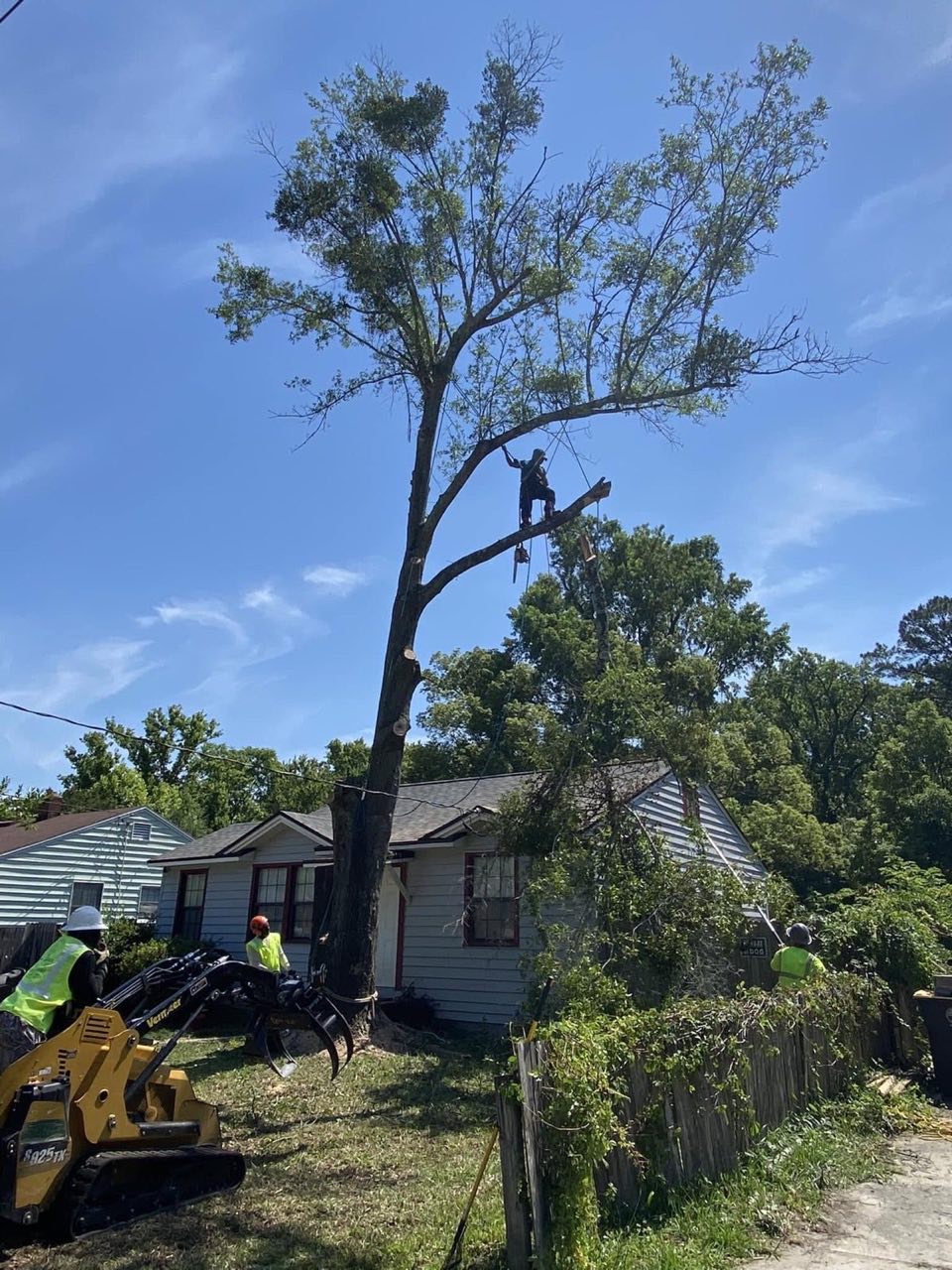
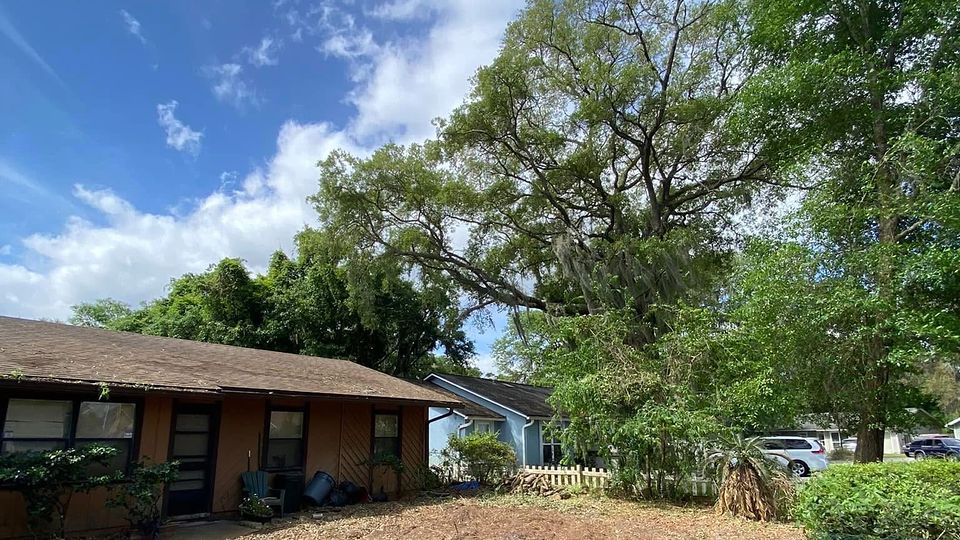
Hurricane season runs June 1 through November 30, and in Jacksonville the trees do most of the damage. Wind alone rarely takes out a roof. A sixty-foot oak dropped across it does. The good news is that the worst tree failures are usually predictable, and the time to deal with them is before the storm has a name.
How do you prepare trees for hurricane season in Jacksonville?
Preparing trees for hurricane season comes down to three jobs done before the forecast turns: find the hazards, trim the right way, and remove what can't be saved. Walk the yard and look for dead limbs over the roof, driveway, and power lines, then check trunks and root zones for fungus, cracks, and lifting soil. Have the canopy thinned by a professional so wind can pass through it, and never let anyone top a tree, because topping creates weakly attached regrowth that fails in the next storm. Finally, deal with any tree that is dead, dying, or leaning worse every year, since saturated ground and tropical gusts finish what decay starts. Schedule the work in spring or early summer, while crews still have room on the calendar. The sections below walk through each step.
Walk your yard and look up
Start with what hangs over things you care about: the roof, the driveway, the power line to the house, the neighbor's fence. Look for dead limbs, branches rubbing the shingles, and anything cracked or hanging from a previous storm. Those are the pieces that fly first.
Then look down
Check the base of each large tree. Mushrooms at the trunk, lifting soil, exposed roots that have been cut for a driveway or a trench. A tree with a bad root system can look completely healthy right up until the ground is saturated and the wind is gusting, which is exactly the condition a tropical system brings.
Trim it right, don't top it
Good trimming thins the canopy so wind can pass through instead of pushing on the tree like a sail. What you don't want is topping, where the whole crown gets chopped flat. Topping stresses the tree and the regrowth comes back weakly attached, which makes the next storm worse, not better.
Know your trees
Around Jacksonville, water oaks and laurel oaks cause a lot of the storm damage. They grow fast, age fast, and hollow out from the inside, so a big one near the end of its life is worth a hard look. A big laurel oak hanging over a bedroom is the tree we get asked about most after a storm, and it's the one worth checking before one. Pines tend to snap partway up the trunk rather than uproot, so a tall pine's danger zone is wherever the top half would land. Palms usually ride storms out fine, but loose fronds and seed pods become projectiles, so clean them up.
A simple pre-season timeline
- March through May: walk the yard, get estimates, and book removals and big trims while calendars are still open.
- Early summer: finish the trimming and haul-off so nothing loose is lying around when the first system spins up.
- When a storm is named: secure furniture and loose limbs, photograph your trees for insurance, and don't start cutting anything yourself.
- After it passes: check from the ground, stay clear of anything touching a line, and call for cleanup if something came down.
Why Jacksonville yards take storms harder than they look
Two local factors make tree failures here worse than the wind speed alone would suggest. The first is the ground: by late summer, months of near-daily thunderstorms have already soaked the soil, so by the time a tropical system arrives, roots are anchored in something closer to mud than dirt. Trees that would shrug off the same gusts in a dry October can tip in a wet September. The second is the canopy itself. The older parts of Jacksonville, Orange Park, and St. Augustine are full of big, mature oaks planted generations ago, standing close to houses that were built before anyone worried about fall zones. That combination of old trees, soft ground, and tight quarters is exactly where pre-season prep pays for itself.
Don't wait for the cone
Once a storm shows up in the forecast, every tree company in town books out. The removals and trims you want done before a storm are the ones scheduled in spring and early summer, when crews have room on the calendar and you can pick your date.
After the storm
Stay away from anything touching a power line, full stop. Don't run a chainsaw overhead or on wood that's under tension, because bent limbs store a surprising amount of energy. For a tree on the house, on a car, or blocking the driveway, call for help and let a crew with the right equipment work it free.
If you've got a tree you're not sure about, the estimate is free. Call (904) 472-4860 or request a quote online, and we'll come look before the next system spins up. Not sure whether a tree is actually a hazard? Start with the six warning signs we look for.